
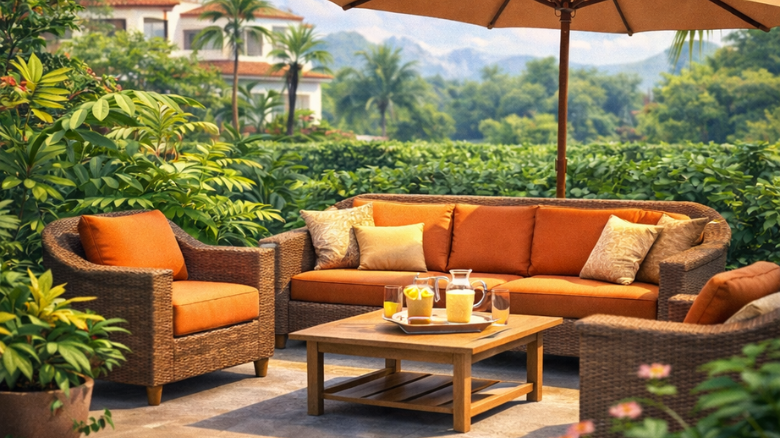
India’s extraordinary climatic diversity poses serious and sustained challenges for outdoor furniture of all kinds. The coastal regions of Kerala, Goa, and Tamil Nadu endure persistent humidity and salt-laden sea air that attacks exposed materials relentlessly year-round. The northern plains experience intense summer heat that bleaches and cracks unprotected surfaces before plunging into cold, dry winters. The northeastern states receive some of the heaviest monsoon rainfall recorded anywhere on earth. This wide variation in conditions makes choosing outdoor furniture in India far more nuanced than in most other countries. This guide explains which materials stand up to it.
Understanding the Indian Climate Challenge
Before selecting outdoor furniture materials, it helps to understand precisely what Indian environmental conditions demand over time. UV radiation across most of India is intensely high for the majority of the year, causing unprotected materials to bleach, crack, and structurally degrade with alarming speed. The monsoon season brings sustained moisture that accelerates rust in ferrous metals, causes natural wood to swell and split through repeated saturation cycles, and promotes mould and mildew in porous materials. High coastal humidity drives oxidation deep below metal surfaces with particular aggression.
In the Deccan cities this means two hard seasons. In Hyderabad, afternoon temperatures approach or pass 40°C in April and May, and in both Hyderabad and Bengaluru the southwest monsoon brings steady rain from June to September. Furniture on an open terrace has to cope with both.
Teak Wood: India’s Timeless Champion
Teak has been the preferred material for outdoor furniture across South and Southeast Asia for centuries, and its reputation rests on genuinely exceptional natural properties. Teak’s extraordinarily high natural oil content makes it inherently resistant to moisture penetration, wood rot, and wood-boring insects without requiring any chemical treatment. Plantation-grown teak gives the same properties as old-growth timber at a fairer price and with less pressure on natural forests.
Powder-Coated Aluminium: The Smart Metal Choice
For homeowners who prefer metal outdoor furniture, aluminium is the clear winner over cast iron or standard steel in the Indian climate. Pure aluminium does not rust under any conditions, naturally forming a stable oxide layer that permanently resists moisture-driven corrosion. It is also inherently lightweight, making it easy to rearrange your outdoor furniture configuration according to season or occasion. Powder-coated steel is a cheaper and stronger alternative, but it rusts wherever the coating is chipped, so check the finish and touch up any chips. The Serenity hanging swing at Anu Furniture, for example, pairs handwoven synthetic wicker with a powder-coated steel frame.
Resin Wicker and Treated Hardwoods
Synthetic resin wicker woven over aluminium frames has become one of the most popular materials for outdoor furniture across India’s urban homes and hotel properties. Unlike natural rattan, resin wicker is completely impervious to moisture absorption, naturally mould-resistant, and UV-stabilised to prevent fading, bringing genuine resort-quality elegance to any terrace or garden. For those who prefer natural wood at more accessible price points, properly treated Sheesham and Acacia with weatherproof sealants and UV-resistant topcoats perform credibly in Indian outdoor conditions for several years. Expect to reseal them every year to keep that protection.
Essential Maintenance for Longevity
Even the most weather-resistant outdoor furniture benefits from consistent seasonal care in the Indian climate. Use waterproof furniture covers during prolonged monsoon periods when pieces are not in active use. Clean all surfaces with a mild soap solution at the start and end of each monsoon season to remove mould spores and accumulated grime. Oil natural timber pieces annually to replenish moisture content and maintain structural integrity and colour vibrancy over many seasons. Store all loose cushions indoors overnight during wet weather to prevent mould growth in foam cores. Following these straightforward practices can meaningfully extend the lifespan of your outdoor furniture by many years.
Outdoor materials at a glance
| Material | Sun | Rain | Care |
|---|---|---|---|
| Teak | Weathers to silver-grey unless oiled | Natural oils resist rot | Oil once a year |
| Powder-coated aluminium | Coating can fade over years | Does not rust | Wash with mild soap |
| Powder-coated steel | Coating can fade over years | Rusts where the coating chips | Touch up chips promptly |
| Synthetic (resin) wicker | Choose UV-stabilised | Does not absorb water | Rinse and dry |
| Treated sheesham or acacia | Needs a UV-resistant topcoat | Swells if left wet | Reseal every year |
General guide for the Indian climate.