
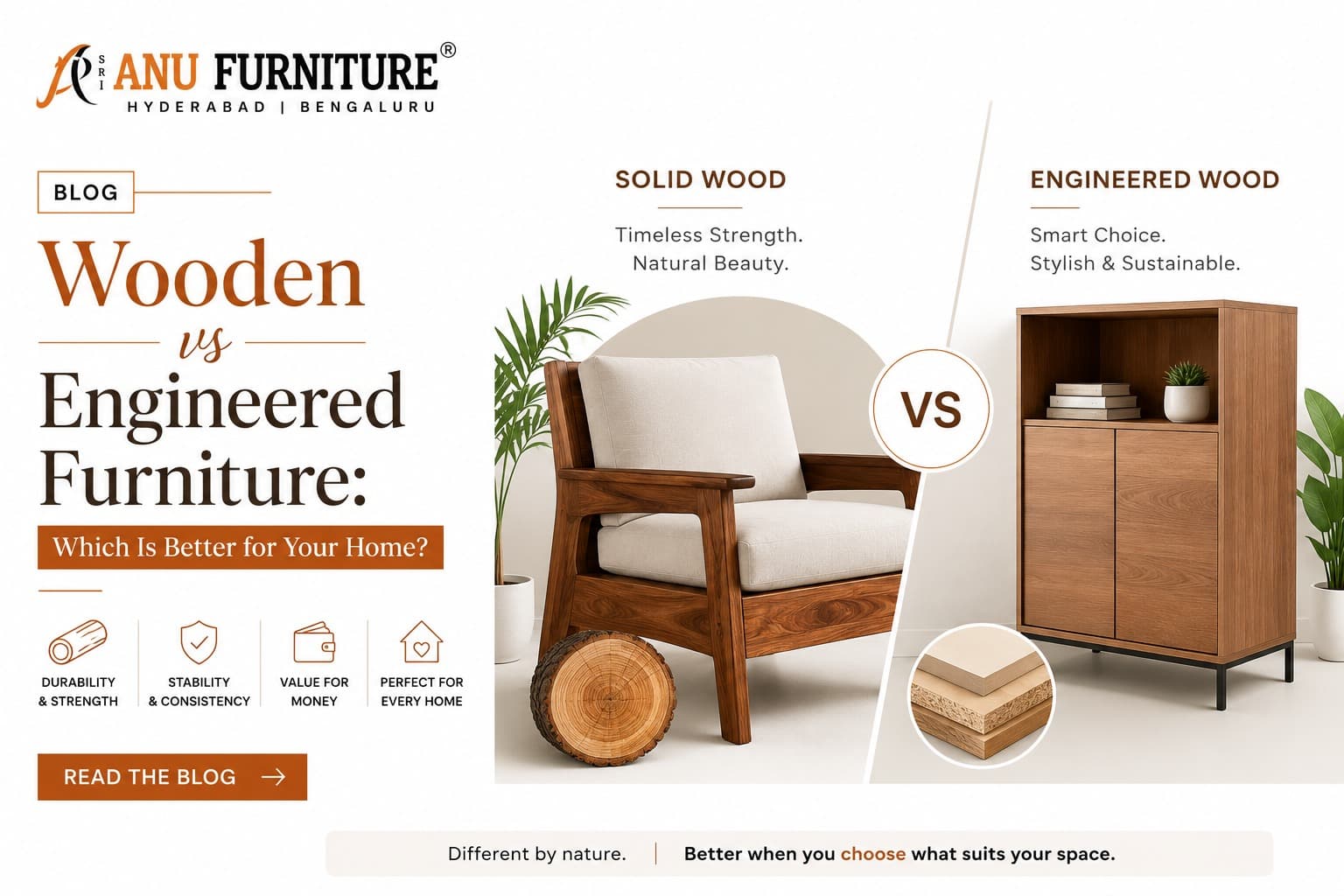
When it’s time to buy furniture, one of the most common questions homeowners face is whether to choose solid wood or engineered wood. Both have their loyal fans, and both can look beautiful in the right setting. But they differ in important ways, from cost and durability to appearance and environmental impact. Understanding the solid wood vs engineered wood debate will help you make a confident choice that suits your home, your lifestyle, and your budget.
At Anu Furniture, we believe an informed decision is always the best decision. In this guide, we’ll break down the key differences, the pros and cons of each, and how to decide which is right for you, so you can invest in pieces you’ll love for years.
What Is Solid Wood Furniture?
Solid wood furniture is crafted entirely from natural timber, sourced from trees such as oak, teak, sheesham, walnut, or pine. Each piece showcases the natural grain, color variation, and character of the wood, giving it a warm, authentic appeal that’s hard to replicate.
Because it’s made from genuine timber, wooden furniture is prized for its durability and timeless beauty. Many solid wood pieces last for decades, even generations, and develop a richer character over time. It’s the classic choice for those who value craftsmanship, longevity, and the unmistakable feel of natural materials.
What Is Engineered Wood Furniture?
Engineered wood, sometimes called manufactured or composite wood, is made by binding together wood fibers, particles, or veneers with adhesives under heat and pressure.
Common types include plywood, MDF (medium-density fibreboard), and particleboard, often finished with a laminate or veneer surface.
The result is a stable, affordable, and versatile material. Engineered wood furniture can mimic the look of solid timber at a lower price point and is widely used in modern flat-pack and ready-to-assemble designs. It has become hugely popular for contemporary homes thanks to its consistency, clean finishes, and accessibility.
Comparing Durability
Durability is often the deciding factor, and here solid wood generally takes the lead.
Well-made solid wood furniture can withstand years of daily use and can often be sanded down and refinished if it gets scratched or worn. With proper care, it can genuinely last a lifetime.
Engineered wood is sturdy and reliable for everyday use, but it doesn’t always match the lifespan of solid timber. It can be more vulnerable to moisture and may not be repairable in the same way if damaged. That said, high-quality plywood and well-finished engineered pieces can still serve you well for many years. In the solid wood vs engineered wood comparison, solid wins on longevity, but engineered offers respectable durability for the price.
Comparing Cost
Budget plays a major role in most furniture decisions, and this is where engineered wood shines. Because it’s manufactured from processed materials, it’s significantly more affordable than solid timber. This makes it an excellent option for those furnishing a home on a budget or wanting a stylish look without a premium price.
Solid wood, being a natural and increasingly precious resource, commands a higher price, reflecting its quality and longevity. While the upfront cost is greater, many see it as a worthwhile long-term investment. When weighing the best furniture for home within your budget, it’s worth considering cost not just upfront but over the lifetime of the piece.
Comparing Appearance
Both materials can look stunning, but they offer different aesthetics. Solid wooden furniture has natural grain patterns, knots, and subtle color variations that give each piece a unique, organic character. No two items are exactly alike, which adds warmth and authenticity.
Engineered wood, by contrast, offers a more uniform and consistent appearance. Veneers and laminates allow for a wide range of finishes, colors, and sleek modern looks that are perfect for contemporary interiors. If you love clean, minimalist designs, engineered options provide plenty of stylish choices. Your preference here comes down to whether you favor natural character or polished consistency.
Comparing Maintenance
Maintenance needs differ between the two. Solid wood requires a bit more care to keep it looking its best, occasional polishing, protection from extreme temperature and humidity changes, and prompt attention to spills. In return, it rewards you with lasting beauty and the ability to be refinished.
Engineered wood is generally low-maintenance and easy to clean, simply wipe it down as needed. However, it’s important to protect it from prolonged moisture, which can cause swelling or damage. Neither option is difficult to care for, but solid wood asks for slightly more attention in exchange for its longevity.
Environmental Considerations
Sustainability matters more than ever, and both materials have a role to play. Solid wood, when responsibly sourced from sustainably managed forests, is a renewable, biodegradable, and long-lasting material, its longevity means less frequent replacement.
Engineered wood often makes efficient use of wood by-products and fast-growing species, reducing waste. However, the adhesives used can sometimes contain chemicals, so it’s worth looking for low-emission, certified products. Both can be eco-friendly choices when sourced thoughtfully, so check for responsible manufacturing if sustainability is a priority for you.
Which Should You Choose?
The right choice depends on your priorities. To make it simple, consider these quick guidelines:
-
Choose solid wood if you want maximum durability, timeless natural beauty, and a long-term investment you can pass down, and you’re comfortable with a higher price and a little extra care.
-
Choose engineered wood if you’re working with a budget, love modern minimalist finishes, or need lightweight, easy-to-assemble pieces for a contemporary home.
-
Consider a mix of both, solid wood for hero pieces like dining tables and beds that see heavy use, and engineered wood for items like wardrobes, shelving, or accent furniture.
There’s no single right answer, only the option that best fits your home and lifestyle. Many homeowners find that blending both gives them the ideal balance of quality, style, and value, making it the best furniture for home in real, everyday terms.
Final Thoughts
Both solid and engineered wood have genuine strengths. Solid wooden furniture offers unmatched durability, natural character, and lasting value, making it perfect for those who prioritize longevity and craftsmanship. Engineered wood furniture delivers affordability, versatility, and sleek modern style, ideal for contemporary homes and budget-conscious buyers.
Rather than viewing it as a strict either/or decision, think about what each piece needs to do in your home. The most practical approach often combines both, letting you enjoy the best of each material where it matters most.
At Anu Furniture, we offer a carefully curated range of both solid and engineered wood pieces, crafted with quality and style in mind. Whichever you prefer, our collection helps you find the best furniture for home that suits your taste and budget.
Ready to find your perfect pieces? Browse the Anu Furniture range today and discover furniture built to bring beauty and function to every room.